The Warrior's Journey
As soon as he joined the Marines following high school, Gabriel Axtell knew he wanted to make the military his career. He advanced through the ranks, becoming a part of the elite Marine Special Operations Command (MARSOC). He deployed three times to gather intelligence, the first two times as a machine gunner, the last with MARSOC.
A bout with testicular cancer and chemotherapy at age 23 sidelined Axtell for a year, but didn’t prevent him from being selected for MARSOC, convinced more than ever he had found his lifetime mission. He became a chief instructor teaching helicopter rope suspension techniques and military mountaineering as a training exercise chief instructor.
Yet his world began to unravel as a result of a freak accident playing rugby. Another player fell on him, breaking his tibia and ankle in four places. A grueling year of surgery and rehabilitation followed. Back in the Marines, in a training exercise, Axtell parachuted out of a plane and broke his leg again in two places, in addition to suffering tendon and ligament damage in his ankle.
In a new surgery, doctors removed the pins, rods, and plates from his first operation and fit Axtell for an external prosthetic leg. But the injury didn’t heal well, despite extensive physical therapy. In 2020, the military forcibly retired Axtell 12 years after he signed up.
The injuries and two years of agony occurred just after Axtell had committed his life to Jesus in 2018. Although he found work managing a mortgage lending office, Axtell grew confused, angry, and depressed over the loss of his vocation. He began to drink alcohol excessively — including at the office. One night, Axtell accepted an invitation from old high school friend Jared Carter to attend a Fellowship of Christian Athletes banquet. At the event, Axtell’s belligerent behavior concerned Carter, who called Axtell’s wife, Moriah, and warned her to hide any guns in the house.
Axtell indeed went home with the intent of killing himself.
“I didn’t understand why I was going through the trials,” Axtell recalls. “I couldn’t find any purpose anymore. I thought I was a liability to everybody.”
Axtell opened the gun safe at his house and found it empty. He says at that moment God gave him a vision of the pain and suffering he would cause to his wife and three children if he committed suicide. Moriah entered the room and Gabriel collapsed in her arms, crying, before he fell asleep.
The next morning, Axtell woke up to a text message from Carter containing the phone number of Kevin C. Weaver, president and CEO of The Warrior’s Journey (TWJ), an organization committed to helping veterans heal from “invisible wounds.” Axtell called Weaver that Saturday and talked for 90 minutes. The following Monday, Axtell had been paired with a “connector” who started providing support and encouragement to help Axtell through the crisis.
THE JOURNEY’S BEGINNING
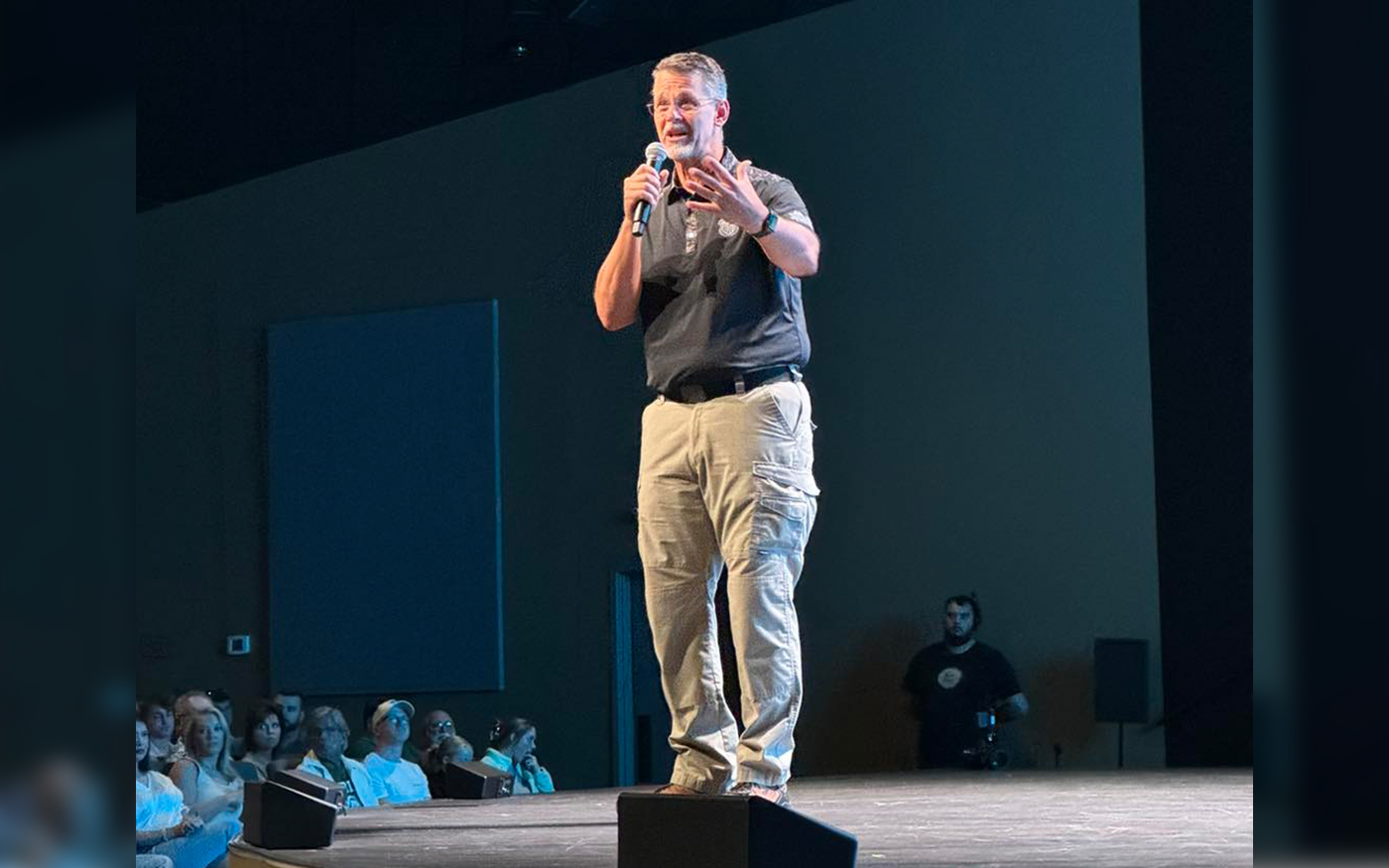
Since 2015, TWJ, headquartered in Springfield, Missouri, has been helping veterans like Axtell. Weaver is a former Assemblies of God pastor, current AG world missionary, and an Air Force veteran. At 63, Weaver exhibits the upright bearing of a serviceman plus the enthusiastic passion of a minister.
Weaver served five years with U.S. Air Force security forces in Panama. While there, he led more than 40 airmen to salvation in Jesus. He sensed the Lord telling him to preach the gospel full time, initially as an AG world missionary at a church next to Howard Air Force Base in Panama. Stateside pastorates followed, including a Church Multiplication Network pilot plant in Jackson, Mississippi, in 2005.
In 2014, Mark D. Flattery, president of the interactive online AGWM ministry Network211 asked Weaver to join the team, specifically to reach military families. The initiative grew so much that The Warrior’s Journey became its own organization in 2015.
“The War on Terror was still raging and we knew combat trauma was a big problem,” Weaver remembers. “We knew the spiritual needs of a soldier, sailor, airman, and Marine were fairly similar. Just listening can be therapeutic, to show the power of presence.”
Partnering with a connector — a veteran who has been through a similar experience — is key to getting over the hump in a crisis. TWJ volunteers have conducted more than 37,000 face-to-face conversations. One-on-one connectors are branch, rank, and gender specific. For example, a male Marine officer veteran will be paired with another male Marine officer veteran.
While at a meeting in the Pentagon in the early days of TWJ, Weaver had a chance encounter with Thomas J. Solhjem, soon to become U.S. Army chief of chaplains. After talking a while, Solhjem realized that Weaver had been his pastor 35 years earlier when Solhjem was stationed in Panama. Solhjem authorized a survey and nearly 500 members from all military branches helped to identify the top challenges facing veterans. Harvard University then supervised an empirical study on the findings.
Weaver naturally suspected that Post-Traumatic Stress Disorder would be near the top of the list of issues leading to invisible wounds. But PTSD actually came in 10th, below such factors as isolation, insignificance, fear, family brokenness, hardship of separation, and financial difficulty.
FAITH ELEMENT
Through TWJ, Weaver wanted to create a faith-based nonprofit that offers hands-on assistance which the government recognizes as viable, areas such as addiction recovery. Rather than becoming a parachurch ministry, Weaver opted for TWJ to form as a veteran service organization (VSO) in order to reach a broader range of veterans. Only four faith-based VSOs existed at the time, out of 42,000 VSOs, which tend to use traditional methods such as dog or equine therapy.
TWJ became a licensed government contractor, providing services, programs, and resources to help veterans heal through physical, emotional, social, and psychological pillars the military already had established.
“But no one was doing what we felt was so important — healing wounds with a spiritual component,” Weaver says. “We have a holistic approach to invisible wounds.”
A key element of TWJ is suicide prevention. The organization has a confidential 24/7 crisis hotline, with callbacks within a minute or two. In over a decade, only one veteran out of 4,800 contemplating suicide has gone through with the act.
TWJ has garnered much grassroots cooperation from branches of the military. But the nonprofit hasn’t compromised its distinctly evangelical Christian mission, most evident in the biblical principles utilized in the one-on-one connector program.“The spiritual component is our anchor,” Weaver says. “We customize a plan for every person based on his or her need, and give Jesus a chance to do a miracle of healing, rather than just managing the situation.”
Scott McChrystal, who served in the U.S. Army for 34 years, has been on the TWJ advisory board since the beginning as military liaison. After finishing as senior chaplain at the U.S. Military Academy at West Point, McChrystal spent 14 years as the AG military chaplaincy representative and endorser through U.S. Missions Chaplaincy Ministries.
“The Warrior’s Journey doesn’t throw Christian faith in anybody’s face, but we stand solidly as a faith-based organization,” says McChrystal, 77. “We don’t discriminate in any way. We’ll help any veteran, regardless of faith.”
All 150 active connectors are trained volunteers, either veterans, active-duty personnel, or a family member of a veteran. About 40% earlier received TWJ help themselves. Weaver hopes to have 300 connectors by the end of next year.
“Connectors aren’t counselors or mental health care professionals,” Weaver says. “They are there to listen, ask questions, and share their story.”
EXPANDING INFLUENCE
TWJ is growing. People hear about the organization by word of mouth, through its website, social media, podcasts, even the QR code on Weaver’s car. In addition to the Springfield location (which had 4,000 visitors in the past two years), The Warrior’s Journey has “resiliency centers” in Germany, Japan, McConnell Air Force Base in Kansas, and one newly opened at Fort Bliss in El Paso, Texas. A resiliency center will open in San Antonio in the fall, with more centers set to launch next year in San Diego, Fayetteville, North Carolina, and Pensacola, Florida.
Currently TWJ has a $3 million operating budget, which Weaver expects to double by the end of 2027. Roughly 80% of funding comes from corporations.
“The Warrior’s Journey strives to help veterans and often their family members as well, and it doesn’t cost them a dime,” McChrystal says. “There is no hitch.”
Weaver says TWJ offers daylong workshops to help churches become more military-friendly. Pastors need to realize that veterans are a hidden people group, he says.
“A lot of veterans carry deep wounds and simply walking into a church — where they think everyone else has it all together — is not the solution,” says Weaver, who attends Bent Oak Church, an AG congregation in Springfield. “The goal is to get the veteran in church to feel worthy and to thrive spiritually.”
Weaver and his wife, KyAnne, have three sons, who have followed in their father’s ministry or military footsteps. Kaleb is worship pastor at Abundant Life Church in Lee’s Summit, Missouri; Keith is a U.S. Army major in Special Forces; and Klay, after seven years of active duty, is operations director at TWJ.
Although Gabriel Axtell, 36, still is a licensed mortgage and real estate agent, in 2024 he became a full-time TWJ employee. He and Moriah — who wed nine months after he joined the military — are the parents of Kylee, 10; London, 7; and Brock, 5.
“My job now is to minister to veterans,” says Axtell, who lives in Port Saint Lucie, Florida. “God’s plan wasn’t my plan, but now I realize He had a purpose all along.”
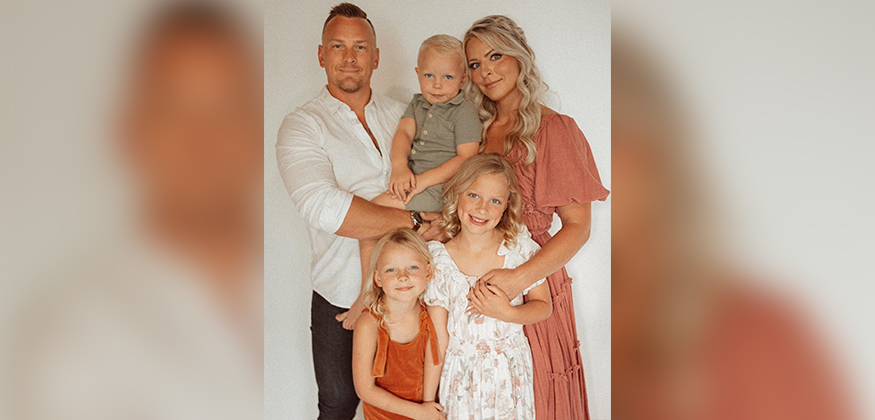
PHOTOS: Top image: Kevin Weaver; Lower image: Gabriel Axtell family.